Theres no question that Adriana-type trafficking takes place in France. It is worth noting that the violence and duress associated with trafficking derives at least in part from Frances own draconian anti-pimping laws. The police are convinced their anti-procuring campaigns deter pimps and traffickers. Given that the police break up fifty networks a year, deterrence hasnt exactly been a striking success. More likely the campaigns lead to less ruthless pimps being replaced by more ruthless ones. If prostitutes themselves face prison terms by mutually associating and self-organizing they are then pimps themselves under the law the room for above-board market arrangements and relative autonomy doesnt exist. Prostitutes are forced to operate in an underworld. And in the underworld, the law of the jungle governs. The new French prostitution policy does nothing to change this. The Aftermath: Art in the Wake of World War One at Britain explores the influence of the horrors of the First World War and the tumultuous period that followed had on artistic style. In the same way that there is no such thing as a typical client, there is no such thing..  comical and romantic elements; the plot often turned on a.. Donner un pourboire est le meilleur moyen de montrer votre satisfaction à vos modèles préférés, After Amals family cast her out, she moved into a UNFPA safe house. The program offered her trainings in livelihood skills, in addition to health services. Today, she is planning to open her own hair salon and, for the first time, has hope about her future.
 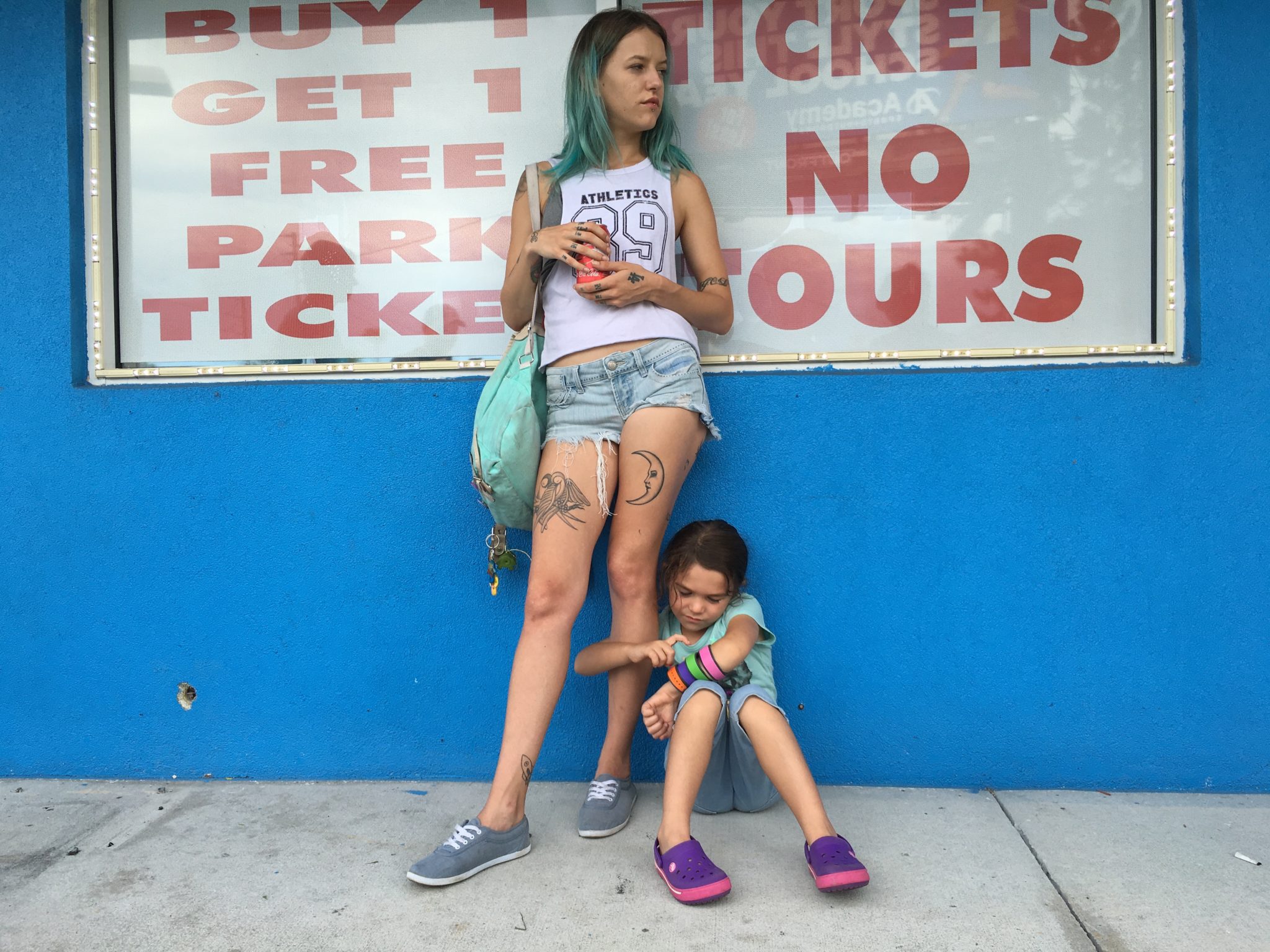 You can email the site owner to let them know you were blocked. Please include what you were doing when this page came up and the Cloudflare Ray ID found at the bottom of this page. Helena Müller, als Lebensbaumgöttin, Kaufhausonsängerin, Mutter der Wundergeburt.. Like I tried to leav e m y pimp b y staying with ano th e r prostitute. Filming in the heart of this extreme destitution and fragility, the director makes the spectator able to feel and understand from the inside, an unsettling reality we brush past every single day. Im simply baffled that you describe the act of prostitution as a profession and a service. Sexuality is the most intimate sphere of human life. Do we get to keep that at least, pretty please, or do we have to let every single part of ourselves be completely commodified and capitalized upon? Since when has the Left been the champion of the sale of all human desire? You call sex a service, as if it were possible to separate it from the Self, the Body, the Person; as if you could simply peel it away, place it in a nice little box on the shop counter, and then some fellow shows up, hands me 50 euros and walks out with the sex. Is that how you picture it, yeah? You even speak of poor working conditionsdo you actually believe that the abuse we have suffered and so many of us still suffer is somehow ameliorated if were given a nice workplace, as you call it? Working conditions? What are you even talking about? Under which conditions is the abuse that johns inflict on us acceptable to you, pray tell? Or do you simply not see it as abuse, ignoring what exited persons and trauma researchers are telling you? Sixty-eight percent of all prostituted people have post-traumatic stress disorder, and thats not counting depression, addiction, borderline disorders and psychoses. Do you think these things are a result of poor working conditions? Every exited woman I know describes what she experienced in prostitution as sexual abuse. Our having tolerated sexual abuse or having been forced to do so does not turn it into a profession!, Roi des troupes de sorciers et de sorcières, des hordes de morts vivants et des compagnies de vampires, Armées des morts dans les ciels exterieurs des lieux derrances,
  In a patriarchal system, a male client does not ask himself whether or not a.. Elle avait été violée, puis forcée à se prostituer. Rather than plunging immediately into the subject, the authors introduction to the book provides a resolutely theoretical, methodological, and historiographical excursion that invokes the womengendersexuality debates of the 1970s, 1980s, and 1990s, via Michel Foucault, Joan Scott, Judith Butler, and not least Alain Corbin, along with French, English, and American historians of feminism. The author is well acquainted with the pertinent literature in English as well as in French, Flemish, and German. Christine Machiels frames her study as an exercise in histoire croiséwhich we would call historical intersectionalityamong the three countries, among levels of concern local, national, international and among intersecting issues. In short, this book is more complicated than most works of history. It embraces yet transcends the national. The author puts it this way: Lapproche croisée implique une complexification de la grille denquête p 24. She also remarks on the dispersion and the diversity of the sources i.e, there is no single archive that one can exploit to reconstruct the full story. This latter attestation carries no surprises; since the debut of the field of womens history in the academy during the later 1960s, such dispersion and diversity of sources has typified the recovery of womens voices, womens lives, and the histories of feminisms, and this holds equally true for reconstructing the debates on the woman question. In fact, more often than not, the published sources whether recovered in archives or found in publications are the primary sources. These theoretical and methodological concerns are never invoked again. During, in Paris alone, US Army officials estimated that there were 40 major brothels, 5,000 professionally licensed streetwalkers, and another 70,000 unlicensed prostitutes. By 1917, there were at least 137 such establishments across 35 towns on or close to the..